Donald Trump did not merely let slip a reckless aside when he said he wanted to “finish this one first” – meaning Iran – before turning to Cuba. He revealed a governing mindset. Countries become items in a queue. War becomes a scheduling matter. One theater before the next, one pressure campaign before the next, one performance of toughness before the cameras move on. That is not strategic restraint. It is imperial casualness masquerading as command. Reuters reported on March 5 that Trump said he wanted to finish the war in Iran first and that it would then be only “a question of time” before attention shifted to Cuba; two days later, Reuters reported him saying Cuba was already negotiating with him and Marco Rubio.
What makes the remark more damning is the promise it betrays. Trump sold himself to voters as the man who would stop wars, not start them. In his inauguration address, he said his “proudest legacy” would be that of a “peacemaker and unifier,” and that America’s success should be measured not only by the battles it wins but by the wars it ends and the wars it never gets into. Even in late February, the White House was still branding him the “President of Peace.” Yet the administration is now openly talking about winning the war with Iran, rejecting negotiations, and even asserting a right to shape Iran’s political future.
You do not have to praise the Iranian state to recognize the danger in that. The issue is not whether one approves of Tehran. The issue is whether an American president who campaigned against endless war is now normalizing the oldest and most discredited habits of Washington foreign policy: regime-change rhetoric, contempt for diplomacy, and the fantasy that bombing can substitute for strategy. When Trump says he is not interested in negotiating and muses that there may be nobody left to say “we surrender,” he is not sounding like a dealmaker. He is sounding like every hawk who has ever confused devastation with victory.
The Cuba remark matters for another reason as well. It suggests that Iran is not being treated as a singular emergency but as one stop in a broader politics of coercion. That is how permanent interventionism works. Every crisis is packaged as exceptional, urgent, and morally self-evident – until the language starts to slide. First this country, then that one. First “finish” Iran, then move on. First present force as a necessity, then sell the next confrontation as inevitable. Trump’s words make that rhythm impossible to miss. The vocabulary may shift from threat to negotiation to triumphalism, but the premise remains the same: Washington decides, others adjust.
Congress, meanwhile, is doing what Congress so often does when presidents discover a taste for undeclared war: almost nothing. On March 4, a Senate majority voted to block a bipartisan war-powers resolution that would have required congressional authorization for hostilities against Iran. That abdication is not a procedural footnote. It is one of the great mechanisms by which American wars become easier to start, harder to stop, and almost impossible to own. Presidents escalate. Legislators grumble. Then the war machine keeps moving.
And it is moving fast. Reuters reported this weekend that the administration used emergency authority to bypass Congress and expedite the sale of more than 20,000 bombs to Israel, just as the joint U.S.-Israeli air war against Iran entered its second week. This is what “peace through strength” usually means in practice: fewer restraints, more munitions, and a shorter distance between rhetoric and rubble. The slogan is designed to comfort Americans into believing that force is a form of stability. More often, it is simply the marketing language of escalation.
There is a bitter irony in all this. Trump built much of his political appeal on contempt for the failures of the foreign-policy establishment. He derided the disasters of Iraq and Afghanistan. He mocked the bipartisan class that treated military power as a substitute for political imagination. Many voters heard in that rhetoric a genuine break from the habits of intervention. What they are getting instead is something far more familiar: a White House that still speaks the language of swagger, still reaches first for coercion, and still assumes that violence proves seriousness. The branding changed. The reflex did not.
That is why Trump’s “Iran first, Cuba next” posture deserves to be taken seriously – not as a gaffe, but as a warning. It is the language of a president for whom war has become ordinary again, something to be managed, sequenced, and sold. The proper antiwar response is not to choose among Washington’s designated adversaries or to pretend that one target is more acceptable than another. It is to reject the premise itself: that American credibility depends on moving from one confrontation to the next. Iran should not be treated as a stepping stone to another showdown. Cuba should not be dangled as the next file on the desk. And the United States should not be asked, yet again, to mistake machismo for peace. Trump was marketed as a peace president. He now speaks like a man who cannot imagine power without war.
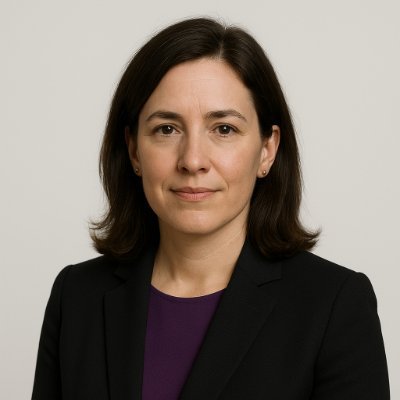 Alice Johnson is a policy analyst and writer focused on global affairs, peacebuilding, and social impact. She explores the intersection of diplomacy, human rights, and civic movements, aiming to highlight stories that bridge understanding across nations. She can be contacted at Itsjohnsonoriginal@gmail.com and followed on Twitter, @ImAliceJohnson.