Reprinted from Andy Worthington’s website.
In what amounts to an extraordinary admission of guilt regarding their historic complicity in the US’s post-9/11 torture program, it was announced on January 11, the 24th anniversary of the opening of the “war on terror” prison at Guantánamo Bay, that the British government has reached a “substantial” out-of-court settlement with Abu Zubaydah.
Abu Zubaydah, whose real name is Zain al-Abidin Muhammad Husayn, was the first and most notorious victim of torture in the CIA’s post-9/11 program of extraordinary rendition and torture, which involved the establishment of secret torture facilities in pliant countries around the world — Thailand, Poland, Romania, Lithuania and Morocco — as well as in US facilities in Afghanistan.
He was held and tortured in all of these CIA “black sites” for three years and five months from April 2002 until his transfer, in September 2006, to Guantánamo, where he has been held ever since without charge or trial.
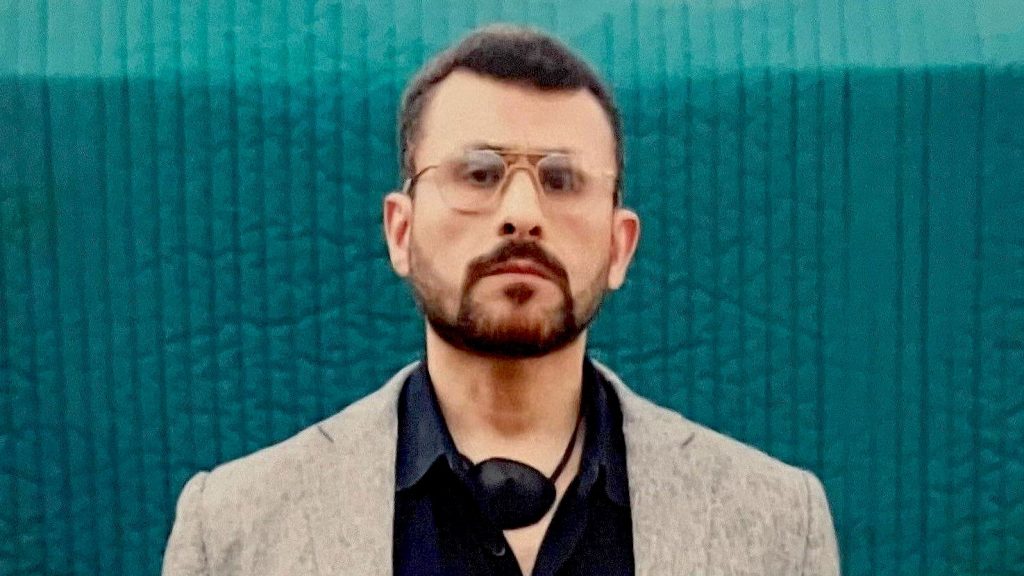
A recent photo of Abu Zubaydah, taken at Guantánamo by representatives of the International Committee of the Red Cross.
When he was first seized, in a house raid in Faisalabad, Pakistan on March 28, 2002, which left him severely wounded, the US authorities initially touted him as the no. 3 in Al-Qaeda, who had been involved in every major terrorist attack by the organization, including the 9/11 attacks, but they eventually walked back from all of their claims.
Despite this, no efforts have been made to release him, and it remains horribly significant that, during his torture, in exchanges between his interrogators and CIA headquarters in Langley, his interrogators sought and were granted reassurances that, if he survived their torture, he would “remain in isolation and incommunicado for the remainder of his life.”
The case against the British government
The UK case against the government was initiated in 2018, after the publication, by the British Parliament’s Intelligence and Security Committee (ISC), of a 152-page report, ‘Detainee Mistreatment and Rendition: 2001–2010’, in which it was revealed that, in May 2002, a US official briefed the intelligence services about Abu Zubaydah.
The report noted that the intelligence services “became aware that he was being subjected to some harsh interrogation techniques, including sleep deprivation, and that it was considered that 98 per cent of US Special Forces would have broken if subject to the same conditions.”
The report added, “The case of Abu Zubaydah shows direct awareness of extreme mistreatment — and probable torture, given the view that 98 per cent of US Special Forces would have broken. However, the Agencies continued to send the CIA questions to be used in interrogations without seeking any assurances regarding Zubaydah’s treatment in detention, until at least 2006.”
In June 2023, after the case had made its way through the UK court system, it ended up at the Supreme Court, where, on December 20, 2023, in a 52-page opinion, the Court found in Abu Zubaydah’s favour. The Court’s ruling, as Helen Duffy, his international counsel, explained in a press release on January 11, was “a preliminary decision.” The case would then “have proceeded to judgment”, but the settlement has prevented further public scrutiny of the actions of the government and the intelligence services in relation to Abu Zubaydah.
However, as the BBC, which first reported the settlement, noted, in its 2018 report the ISC “also criticized MI5 and MI6 for their conduct in relation to the alleged 9/11 mastermind Khalid Sheikh Mohammed [KSM], raising the question of whether he could bring a similar legal claim.” Like Abu Zubaydah, KSM was also held in “black sites” and has been at Guantánamo since September 2006, but, unlike Abu Zubaydah, he has been charged, although his case has been mired in pre-trial proceedings for the last 14 years.
The egregious torture of Abu Zubaydah
Abu Zubaydah’s treatment has long been recognized as being amongst the most egregious violations of a human being’s fundamental rights in modern US history.
The “black site” torture program was a closely-guarded secret until November 2005, when details began to emerge in the US media. I included what was known about his case in 2006-07, when I was writing my book The Guantánamo Files, and continued to scrutinize it through articles on my website from 2008 onwards. In 2009, I included what was then known about his treatment in a UN report on secret detention for which I was the lead author, but it was not until the publication of the unclassified summary of the Senate Intelligence Committee’s report into the CIA torture program, in December 2014, that internal US investigations confirmed the extent of Abu Zubaydah’s torture.
As was noted in the press release by Helen Duffy:
A decade ago the US Senate Torture Report, with 1,001 references to Abu Zubaydah, made clear he was the person for whom the Bush Administration drafted the infamous “Torture Memos” justifying the use of torture, and the only person subjected to all the so-called “enhanced interrogation techniques.” These included being kept awake for 7 consecutive days and doused with cold water whenever he collapsed into sleep. For 266 hours (11 days, 2 hours), he was locked into a box the size of a coffin and left to marinate in his own urine and feces. For 29 more hours, he was crammed into a box that would nearly fit under the chair you are sitting in as you read this. He was stripped naked and beaten. He was suspended from hooks in the ceiling as his feet dangled just off the floor. And on 83 occasions in a single month, he was “waterboarded” — strapped to an inclined board, bound at the arms and legs with his head lower than his feet, and brought within sight of his own death as CIA interrogators poured water up his nose and down his throat.
The long quest for justice and accountability
Meanwhile, years of research into Abu Zubaydah’s case, including groundbreaking reports by the Council of Europe, led to a case being brought before the European Court of Human Rights, which, in July 2014, found that Poland had violated international law by allowing the CIA to inflict what “amounted to torture” at the “black site” it had hosted in 2002-03, on both Abu Zubaydah and another “high-value detainee”, Abd Al-Rahim Al-Nashiri, who is also still held at Guantánamo, and, like KSM and his co-accused, remains caught up in seemingly endless pre-trial hearings.
Poland was ordered to pay €130,000 to Zubaydah and €100,000 to al-Nashiri, and in 2018 similar rulings against Lithuania, in Zubaydah’s case, and Romania, in Al-Nashiri’s case, led to payments of €100,000 for each man. All these payments were legally and morally significant, but useless in any practical sense, as both men remained in Guantánamo, in conditions in which they were — and still are — almost entirely cut off from the outside world.
As Helen Duffy explained in her press release, with reference to Abu Zubaydah, “The violations of Abu Zubaydah’s rights continue. He is still held unlawfully by the US at Guantánamo, 24 years after his initial detention. He has never been charged with a crime. His habeas case seeking release through the US courts has sat pending for nearly two decades. He is one of three ‘forever prisoners,’ who the US claims it can detain for life, without legal process.”
In April 2023, the UN Working Group on Arbitrary Detention issued an opinion regarding Abu Zubaydah’s case, which I described as “the single most devastating condemnation by an international body that has ever been issued with regard to the US’s detention policies in the ‘war on terror.’”
The Working Group found that Abu Zubaydah’s continuing imprisonment without charge or trial constitutes arbitrary detention, via the flagrant abuse of the relevant articles of the Universal Declaration of Human Rights, and the International Covenant on Civil and Political Rights, and expressed “grave concern” that the very basis of the detention system at Guantánamo — involving “widespread or systematic imprisonment or other severe deprivation of liberty in violation of fundamental rules of international law” — “may constitute crimes against humanity.”
As I described it, “The UN also condemned other countries for their involvement in Abu Zubaydah’s arbitrary detention — specifically, Pakistan, where he was first seized, Thailand, Poland, Morocco, Lithuania and Afghanistan, where he was held and tortured in CIA ‘black sites,’ and the UK as ‘a State complicit in the extraordinary rendition program that knowingly took advantage of it.’”
The Working Group also called for his release, and for reparations to be made, but still, however, the US government — then under President Biden — did nothing, prompting a number of UN Special Rapporteurs and Working Groups to issue an urgent demand, on January 8, 2025, for his release, in which they highlighted how he had been “arbitrarily detained for over two decades.”
As the experts stated, “We are exceptionally requesting a Presidential pardon for Mr. Abu Zubaydah, owing to his treatment while in detention and the lack of due process since he was first detained. His immediate release and relocation to a third safe country are long overdue.”
The reference to a third country is because, although Abu Zubaydah was born in Saudi Arabia and grew up there, his parents were Palestinian, and the Saudi government refuses to confer citizenship on foreign nationals. In addition, because he is Palestinian, he is essentially stateless, because Israel has consistently refused to allow any of the handful of Palestinians who ended up at Guantánamo to be returned to the Occupied Palestinian Territory.
As the experts also explained, “Mr. Abu Zubaydah suffers serious health conditions, including from injuries sustained during torture that are allegedly exacerbated by the denial of medical attention. In addition, lawyer-client communication has been seriously impeded.”
They also stated, “In addition to his liberation, we request that Mr. Abu Zubaydah is accorded an enforceable right to compensation and other measures of reparation, in accordance with international law,” adding, “We recall the principle of joint responsibility that applies to States when more than one of them was involved in the perpetration of a human rights violation. Accordingly, we call on States to proactively offer their territory for the prompt relocation of Mr. Abu Zubaydah.”
States’ responsibility for Abu Zubaydah’s release
In the wake of the settlement, Helen Duffy issued the following statement in her press release, on behalf of her Rights in Practice law firm, based in The Hague, and her UK partners, Bhatt Murphy, and counsel Ben Jaffey KC and Edward Craven KC, who argued the case:
It is important, symbolically and practically, that the UK pays for its role in our client’s torture. The settlement provides a measure of redress and implicit recognition of his intolerable suffering at the hands of the CIA, enabled by the UK. While no amount of money can undo the harm suffered, it will help him establish his life when, or if, he is finally released.
The payment is significant, but clearly insufficient to meet the UK’s obligations. More must be done to bring this chapter to an end. Critically, the UK should seek to facilitate the immediate release of Abu Zubaydah, and other prisoners held without charge or trial at Guantánamo. It should restate its Close Guantánamo policy, publicly recognize and apologize for its role, and ensure that lessons have been learned.
Sadly, however, while it is clear that the UK must definitively ensure that it never repeats its many violations of the prohibition on torture that the ISC uncovered in its 2018 report, any redress for Abu Zubaydah’s long and unjust ordeal now, unfortunately, rests in the hands of Donald Trump, who cannot realistically be expected to do anything about it.
As in his first term in office, when he sealed Guantánamo shut, and also, crucially, shut down the office of the Special Envoy for Guantánamo Closure, established under Obama, ensuring that there was no one within his administration who had direct responsibility for Guantánamo, now he is back in power no one in his administration has been assigned responsibility for the “war on terror” prison at Guantánamo, which, for the last year, has been almost entirely ignored as Trump has chosen, instead, to ignore the 15 men still held, and to remake the prison as a theater of performative cruelty in the vile “war on migrants” that he declared when he took office.
With Trump and his administration becoming ever more unhinged, as recent events have shown — via the kidnapping of Venezuela’s President Maduro and his wife, threats to annex Greenland, and ICE agents turning the US mainland into a terror state, in which even US citizens can be murdered with impunity — leaders of other countries are reluctant to cross Trump in any way, fearful that arousing his ire might unleash all manner of horrors.
Instead, those seeking justice for Abu Zubaydah, while organizing to exert pressure on the governments that share responsibility for his torture, are going to have to bide their time in dealing with the US directly.
When even a 37-year old white mother, Renee Nicole Good, who was cold-bloodedly executed by an ICE agent just last week, is rigorously maligned by the administration as a “domestic terrorist,” it is brutally apparent that this is not a regime that will have any interest in releasing a man who, 24 years ago, when his long and grotesque ordeal began, was wrongly described as one of the most notorious terrorists in the world.
Andy Worthington is a freelance investigative journalist, activist, author, photographer (of a photo-journalism project, ‘The State of London’, which ran from 2012 to 2023), film-maker and singer-songwriter (the lead singer and main songwriter for the London-based band The Four Fathers, whose music is available via Bandcamp). He is the co-founder of the Close Guantánamo campaign (see the ongoing photo campaign here) and the successful We Stand With Shaker campaign of 2014-15, and the author of The Guantánamo Files: The Stories of the 774 Detainees in America’s Illegal Prison and of two other books: Stonehenge: Celebration and Subversion and The Battle of the Beanfield. He is also the co-director (with Polly Nash) of the documentary film, “Outside the Law: Stories from Guantánamo”, which you can watch on YouTube here.
To receive new articles in your inbox, please subscribe to Andy’s new Substack account, set up in November 2024, where he’ll be sending out a weekly newsletter, or his RSS feed — and he can also be found on Facebook (and here), Twitter and YouTube. Also see the six-part definitive Guantánamo prisoner list, The Complete Guantánamo Files, the definitive Guantánamo habeas list, and the full military commissions list. Please also consider joining the Close Guantánamo campaign, and, if you appreciate Andy’s work, feel free to make a donation via PayPal or via Stripe.