Interventionism and the Elites
The ideological origins of the military-industrial-media complex
A recent Rasmussen poll has 51 percent of Americans favoring the pullout of all US troops from Europe – and yet not a single major American politician would even consider endorsing such a move. Why is that? I thought politicians were supposed to be consummate opportunists, whose weather vane-like views shift with the winds of public opinion. If so, then they should be jumping on the anti-NATO, anti-interventionist, “mind-our-own-business” bandwagon – right?
Wrong.
The great gulf between the American public and the elites when it comes to foreign policy is a constant source of irritation for the latter. The mandarins of the foreign policy establishment have long bemoaned the “isolationism” of the American people. It’s the natural inclination of a free people to leave others alone, and the Founders exemplified this sentiment when they decried the impulse to “go abroad in search of monsters to destroy.” America “is the well-wisher to the freedom and independence of all,” declared John Quincy Adams in his famous 1821 Fourth of July speech, but:
“She is the champion and vindicator only of her own. She will commend the general cause by the countenance of her voice, and the benignant sympathy of her example. She well knows that by once enlisting under other banners than her own, were they even the banners of foreign independence, she would involve herself beyond the power of extrication, in all the wars of interest and intrigue, of individual avarice, envy, and ambition, which assume the colors and usurp the standard of freedom. The fundamental maxims of her policy would insensibly change from liberty to force…. She might become the dictatress of the world. She would be no longer the ruler of her own spirit.”
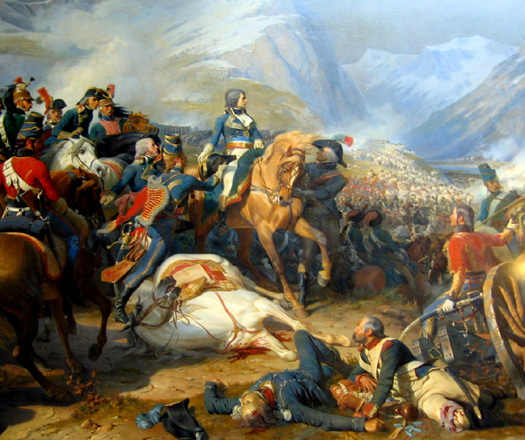
This was the consensus view of the American elite when our country was just out of its cradle, and no one thought to question it: the idea that America would impose its own system on foreigners, and that we had some kind of moral responsibility to save the world from itself, was alien to the American ethos. The example of Napoleonic France served as ample enough warning to any interventionists who would have had us succumb to the temptations of empire: as the French army “liberated” Europe, France itself morphed into a monarchy. When Napoleon crowned himself at Rheims it was an act of transfiguration foreseen by the founders when they warned against the threat of militarism to America’s republican legacy. The danger to the Constitution and the country, they realized, was internal – and it emanated from the imperialist impulse. As James Madison put it in his debate with the neo-royalist Alexander Hamilton:
“Of all the enemies of true liberty, war is, perhaps, the most to be dreaded, because it comprises and develops the germ of every other.
“War is the parent of armies; from these proceed debts and taxes; and armies, and debts, and taxes are the known instruments for bringing the many under the domination of the few.
“In war, too, the discretionary power of the Executive is extended; its influence in dealing out offices, honors and emoluments is multiplied; and all the means of seducing the minds, are added to those of subduing the force, of the people.
“The same malignant aspect in republicanism may be traced in the inequality of fortunes, and the opportunities of fraud, growing out of a state of war, and in the degeneracy of manner and of morals, engendered in both. No nation can preserve its freedom in the midst of continual warfare.”
This anti-interventionist stance flowed from the Founders’ philosophy of governance, which was to strictly limit the power of the federal government and bind the hands of would-be tyrants with the chains of the Constitution. As these chains rusted over time, however, the imperialist impulse was unleashed.
It started with the Spanish-American war, and was exemplified by the windbag and warmonger Theodore Roosevelt, who saw military conflict as the road to the moral regeneration of the nation. While Roosevelt and his supporters made economic and political arguments in favor of their policy, theirs was essentially a case for war as moral rearmament. With the disappearance of the frontier, they averred, the nation has fallen into a state of “decadence,” and the only way to revive that frontier spirit is to extend the frontier beyond the seas and stake a claim for empire.
Teddy’s blustering imperialism was given much impetus by the religious revivalism that swept the country in the nineteenth century: a form of post-millennial pietism that insisted on “purifying” the country of “sin.” Although in the south and Midwest, this revivalism was personal – involving being “born again,” and dispensing with the denominationalism and focus on liturgical orthodoxy that had previously characterized American Protestantism – in the Yankee north it assumed the proportions of a political ideology in which government was seen as the agent of virtue. Theologically, the pietists held that the Second Coming was imminent, but that in order to pave the way for His arrival, it was necessary to first create the Kingdom of God on earth – this, they believed, would hasten the Second Coming.
It was but a short hop, skip, and a jump from “purifying” the country to “purifying” the rest of the world. While preachers at home excoriated “demon rum” and sought to uplift the masses of sinners with all sorts of government programs to inculcate in them the spirit of righteousness, on the foreign policy front Washington moved with dispatch to emulate the European empires by establishing an imperium of its own. However, it would be an empire with a difference. As President William McKinley put it:
“When I next realized that the Philippines had dropped into our laps I confess I did not know what to do with them…. I walked the floor of the White House night after night until midnight; and I am not ashamed to tell you, gentlemen, that I went down on my knees and prayed Almighty God for light and guidance more than one night. And one night late it came to me this way—I don’t know how it was, but it came:
“(1) That we could not give them back to Spain—that would be cowardly and dishonorable;
“(2) that we could not turn them over to France and Germany—our commercial rivals in the Orient—that would be bad business and discreditable;
“(3) that we could not leave them to themselves—they were unfit for self-government—and they would soon have anarchy and misrule over there worse than Spain’s was; and
“(4) that there was nothing left for us to do but to take them all, and to educate the Filipinos, and uplift and civilize and Christianize them, and by God’s grace do the very best we could by them, as our fellow-men for whom Christ also died.
“And then I went to bed, and went to sleep, and slept soundly, and the next morning I sent for the chief engineer of the War Department (our map-maker), and I told him to put the Philippines on the map of the United States (pointing to a large map on the wall of his office), and there they are, and there they will stay while I am President!”
As the pietist ideology of our Yankee elites was secularized, the impulse to “uplift and civilize and Christianize” was transmuted into a crusade to uplift and civilize and democratize. “Democracy” had become the new civic religion, and the effort to export it to benighted foreigners was a useful rationale for expansionism. As usual, however, this official altruism masked mercenary motives: for example, in Hawaii, where the sugar barons cemented their monopoly and their profits by instigating a coup against the native rulers. As America extended its reach into Central and South America the long arm of Wall Street reached out to grab what it could.
World War I was the fulfillment of the secular pietism that had gripped the American elites, as Murray Rothbard shows in this essay, the culmination of religious and ideological trends that had long been in incubation. The war to “make the world safe for democracy” was hailed by progressive intellectuals from John Dewey to Herbert Croly as a crusade that would pave the way for “production for use, not for profit,” and “discipline” the population to achieve the desired “social ends.” Conscription was hailed as a social leveler. War collectivism – the control of industrial production in the name of “national security” – was applauded by the progressive intellectuals of the time as the advent of a new era, tragically cut short by the Armistice: “We were on the verge of having an international industrial machine when peace broke,” said Rexford Tugwell, who would go on to become the most radical of Franklin Roosevelt’s “brain trusters.” “Only the Armistice prevented a great experiment in control of production, control of prices, and control of consumption.”
It was a long way from the warnings of the Founders against the temptations of incessant militarism.
It has to be emphasized that the elites were the agents of this tragic transformation, while ordinary Americans, for the most part, were passive observers. The great machine of war propaganda was necessary to wind them up into a state of appropriately warlike ferocity, and when that great wind machine died down, so too did the public’s bloodlust. A vast propaganda apparatus sprang up that characterized the Germans as veritable agents of the Devil. The teaching of the German language was banned in all school and universities, and in America’s symphony halls there was a moratorium on the playing of music by German composers.
But measures had to be taken in case everyone failed to get the message. War dissenters were ruthlessly repressed, with Eugene Debs jailed for making speeches against the war: in towns across America, the “American Protective Association” – a semi-governmental organization that had the full approval of the White House – tarred and feathered war opponents. Socialist and antiwar newspapers were closed down.
As time went on, the machinery of repression and government propaganda – designed to keep a lid on the natural inclination of Americans to abjure the emoluments of empire – grew to gargantuan proportions. World War II was a Great Leap Forward in this regard. The war was the great furnace in which the modern Warfare State was forged, and out of FDR’s foundry came the finely-honed machinery of perpetual warfare we find ourselves saddled with today. Out of that horror came sedition trials, American citizens being herded into concentration camps, and what John T. Flynn called “the smear terror” – a shadowy network of interlocking interventionist organizations specializing in slandering prominent anti-interventionists as Nazis, fifth columnists, and saboteurs of democracy. In short, the modern War Party was born, one which functions pretty much the same today as it did in the Great Debate of the 1930s. As it turned out, most of these smear groups were directly funded and directed by British intelligence, which was frantically trying to maneuver us into the war.
World War II also laid the foundations of the cold war, which would provide a profitable rationale for the War Party in the postwar years. Again, the British played a key role in inaugurating the new policy, with Winston Churchill’s famous “Iron Curtain” jeremiad. The cold war led to a new wave of repression on the home front, with anyone to the left of Harry Truman targeted as a “red”: the rise of “McCarthyism” led to the conversion of the formerly “isolationist” conservatives into enthusiasts for nuclear war.
The cold war was the occasion for the professionalization and streamlining of the national security state, its full elaboration into an ideological and managerial system in command of vast resources. A whole new profession sprang up, the “Kremlinologist,” whose job it was to glean changes in the Soviet leadership by interpreting the positions of the communist leaders as they stood on the Kremlin walls reviewing the Red Army on parade. The culture of expertise thrived, and learned essays were written and published in august scholarly journals interpreting the hidden meanings of obscure announcements in Pravda. This provided income and prestige for the new rising class of over-educated white people who would otherwise have been teaching high school civics – as well as political ballast for fake “conservatives” like Joe McCarthy, who had previously belonged to the moderate wing of his party. McCarthy jumped at the main chance and hitched a ride on the wings of the war hysteria that possessed Western elites and the major organs of public opinion.
However, when the anti-communist fanatics of the American right-wing finally got their fondest wish, and we were engaged in a shooting war with the reds in Southeast Asia, the War Party was dealt a major setback. Under the magnifying lens of modern technology, which gave us the ability to see and hear what was transpiring on the battlefield thousands of miles away, the propagandistic fantasy of America’s heroic anti-communist crusade was destroyed. Years of media hype about the looming commie menace were erased by the widely-disseminated images and horror stories generated by that war: the alleged communist “threat” was replaced, in the public’s imagination, with the very real threat of internal corruption as the consequence of our foreign policy.
This led to a backlash in which, for the second time in our history, a mass-based antiwar movement took center stage – and, this time, won the intellectual and political debate. For years the War Party griped about the “Vietnam Syndrome,” which prevented Washington from intervening militarily on the grand scale they fondly hoped for. They thought the 9/11 terrorist attacks would remove that obstacle from their path, but the advantage they gained didn’t last – because the real world consequences of their policy proved disastrous.
Public skepticism of interventionism is at an all-time high: a Pew poll taken a few years ago revealed the vast gulf between our interventionist elites and the “isolationist” public, who showed an overwhelming preference for a foreign policy of “minding our own business,” as the pollsters put it.
So why are we presently engaged in what seems like a policy of perpetual war, in spite of the wars’ unpopularity?
Because, for one thing, the making of foreign policy is entirely invested in one branch of government: the executive. The long process of undermining the Constitution has ended in the Imperial Presidency and the creation of a national security bureaucracy where decisions are made in secret, in consultation with a bevy of “experts.” The foreign policy of this country is decided, not by the people or their representatives, but by the inhabitants of think tanks, the leadership of special interest groups, and influential foreign lobbyists. Policy is made, in short, by the elites, centered in Washington and New York.
The media plays such a key role in this that we might as well start referring to the War Party as the military-industrial-media complex. A classic example is the “reporting” done by the New York Times in the run up to the invasion of Iraq: Judith Miller’s retailing of the Bush administration’s talking points in the form of “news” articles was an important part of the campaign to mobilize the elites in favor of intervention. Once they were on board, convincing the public was almost an afterthought.
Rachel Maddow makes a version of this point in her recent book, Drift: The Unmooring of American Military Power: the American public, she argues, is distanced from the key foreign policy decisions that are now the exclusive domain of the elites, and hardly notice we’re in a state of constant warfare. Yet her pro-Big Government views prevent her from seeing this distancing effect is the inevitable result of the growth of centralized State power. We have drifted away from the Founders’ vision, she laments, when it comes to foreign policy – but that’s because we have drifted very far indeed from their minimalist ideology of governance, which is the polar opposite of Maddow’s governmental maximalism.
The military-industrial-media complex is a mighty Wurlitzer that is even now winding up its current campaign, which is to provoke a war with Iran. In action, it is an awesome thing to see: with perfect unanimity, all the Serious People in Washington converge and repeat the agreed-upon talking points, with the “mainstream” media acting as an echo chamber of voices singing war songs in perfect unison. A more effective propaganda campaign was never launched by any totalitarian regime.
Countering this noise level is much more than a full-time job, and do I have to remind you of the great disparity of resources between the War Party and the Good Guys?
You may have noticed that we’re a week into our quarterly fundraising drive – and the results have not been all that great. We’re raising less from fewer contributors, and we’re behind where we should be. Thankfully, a group of supporters has raised a lump sum – $31,000 – in matching funds: which means, they’ll match your contributions dollar-for-dollar. Which means: we don’t get a penny until you donate one.
Look, we’re David to the War Party’s Goliath, armed only with the equivalent of a slingshot. But if we don’t raise enough to pay for that slingshot, the story will have quite a non-Biblical ending. Slingshots don’t cost all that much, relatively speaking – not when you compare it to the huge sums spent by the War Party. They have access to the US Treasury, and we only have the voluntary contributions of our readers and supporters, i.e. you.
Please, help level the playing field. Thanks to the generosity of our “angels,” we have a chance to make this matching funds campaign take us to safer territory. So please – make your tax-deductible donation today.
Read more by Justin Raimondo
- Two Cheers for ‘Isolationism’ – May 19th, 2013
- Our Civil Liberties, RIP – May 16th, 2013
- Raping the World – May 14th, 2013
- The Price of Peace – May 12th, 2013
- Boycott Israel? – May 9th, 2013


sherban
May 22nd, 2012 at 11:11 pm
Great article,Raimondo often can take the reader to the real understanding of history.With much less knowing of US history i answered to an today article of John Glaser in the same way,and i'm very proud for it.What,in my opinion left for Raimondo to explain,is why he sees himself at the right of Ayn Rand and why he speaks about Missile like about Jesus?I mean why he doesn't see that the antisocialism trend is also propaganda exactly how he sees that propaganda in US foreign policy as the first factor.
RickR30
May 22nd, 2012 at 11:39 pm
Outstanding historical summary.
Another sense that we've lost our traditional American ways is the new bizarre arrogance that comes with wealth and with an ivy-league idiotification. The old American humbleness so as not to gloat and invite envy is long gone. The nouveau riche and noeuveau intelligentsia act so much more like eastern european oligarchs in exile in London to escape the law in their own countries. Even McKinley had do blame/rely on god for his demented ideas. Not so with with our current self-perceived geniuses. Only they can guide us and the world. What does anyone else know? Never mind that they get their marching orders straight from tele aviv and someone's torahnic fanaticism. Not that they would ever tell us that.
"we could not leave them to themselves—they were unfit for self-government—and they would soon have anarchy and misrule over there." That seems to be the guiding principle these days of the straussian disciples and their useful idiots. Unfortunately with the end of the cold war, this principle doesn't just guide foreign policy but also domestic. The chosen ones can't possibly let Afghans, Yemenis, Iraqis rule over themselves. Not Germans, French, Greeks either- the euro inbred elite does it for them. Not even Americans are allowed self-determination, what do those ignorant masses know anyway, when we have them, the enlightened ones, the ones fit to rule, the ones accepted by virtue of daddy's $$$ into expensive corruption indoctrination institutions masked as universities. Arrogant schmucks, they couldn't run a household of one, let alone the destiny of billions.
After 9/11, the great experiments in control of production, prices, consumption, becomes the great experiment of social control on a grand scale. Starting with serial abuse by corrupt T&A "agents" of anyone with the audacity to travel by plane. Since that has become a great success in the sheepening of the people we can expect more of that.
Now we have smear groups directly funded and directed by israeli religious fanaticism, which is frantically trying to maneuver us into war.
The fact that most Americans don't want war can only be evidence in the mind of the morally disabled ruling underclass that they are right. In this post-democratic America the wishes of the people guides our chosen people to do the opposite. Same as in Europe and I presume even israel.
richard vajs
May 23rd, 2012 at 5:18 am
Excellant post, Justin. Although you may as well be old King Canute trying to sweep back the incoming tide of ignorance that is fin-de-siecle America. I will donate a few bucks – I'm a sucker for honorable lost causes.
Dave Spart
May 23rd, 2012 at 5:57 am
Who really gives a f*** what the the US citizens think of a pullout from Europe. The opinion that really matters is what the Europeans think. And we don't want any more military occupation of our countries and if they don't get out soon voluntarily , they will be forced to.
Anti_Govt_Rebel
May 23rd, 2012 at 7:37 am
"The opinion that really matters is what"… Israel and AIPAC think.
Generalissimo X
May 23rd, 2012 at 8:57 am
well as a grateful american taxpayer i say when are you euros going to get the stones for that? it's only been 60 years..what are you waiting for? give us the boot! i for one am certainly tired of shelling out the dollars.
San Fernando Curt
May 23rd, 2012 at 1:15 pm
One factor in success of the anti-war movement was that it attracted support from revolutionary groups – in this country particularly well-funded. Most of America grew to oppose the war for pointless cost in death and destruction, but the Left all-but co-opted this disenchantment to peddle its own message and, in its wildest dreams, even foment revolution here. Perhaps that's what opposition to our current empire needs – attraction of a cynically detached political front which can use anti-war activity to further its own seedy cause. Strangely, Leftist participation in the Vietnam war protests served only to strengthen this country, since such corrupt overseas endeavor ended. That's the single benefit our progressives have provided us in all their gas-baggie existence.
San Fernando Curt
May 23rd, 2012 at 1:16 pm
As an American, my perspective is a little different: Who the f*** cares what Europeans think about pullouts, pullovers or curly fries?
James Merritt
May 23rd, 2012 at 3:34 pm
Justin, I've been reading your work for a long time and this is one of the finest pieces I've seen. Well done! But I would disagree with one statement: Under the Constitution, the foreign policy power is NOT entirely invested in the Executive. The powers to make treaties and war, in particular, are held jointly by the President and Congress. No treaty can become effective without Senate approval. Congress is supposed to declare War, and absent such a declaration, the President is supposed to have very limited power to deploy the military. Furthermore, if a President's foreign policy involves spending or the appropriation and use of other resources, Congress must approve that, too. In fact, if Congress ever vigorously asserted its actual authority, it would have a lot of control over foreign policy. Don't blame the Constitution. The President gets away with his shenanigans because Congress and the People won't properly hold him accountable, even though the Constitution affords them ample opportunity to do so. It is important NOT to blame the Constitution, so that we can focus our attention and efforts on approaches that might actually be effective. Blaming the Constitution inevitably leads to call for Constitutional change, but what changes could be made that would both preserve or expand the liberty of American citizens AND restrain the Executive from foreign policy mischief? More likely, any Constitutional change of the necessary magnitude would simply legitimize the remaking of our country into just another oppressive regime, to join the scores that already infest the world, imposing suffering on billions. Our Constitution provides for the legal means to have a revolution that upholds our core founding values and ideals, without scuttling the nation itself. Let's use it! First on the agenda: making sure that those in power know we are awake and paying attention. Fire officials, starting with the Chief Executive and working down from there, who don't seem to understand the Constitution or properly honor it. Don't just hire the guys and gals from the opposite party: Take some time to study available candidates and elect those who seem most likely to sincerely take and then reliably keep an oath to preserve, protect, and defend the Constitution. The first and most crucial step really is that simple, and we need to take it THIS YEAR.
Generalissimo X
May 23rd, 2012 at 5:22 pm
you know your constitution sir, bravo! i regret i have only one thumbs up to give.
tom
May 23rd, 2012 at 5:42 pm
"The media plays such a key role in this that we might as well start referring to the War Party as the military-industrial-media complex."
You have to admit the propaganda is pretty effective, after 9/11 the right under Bush was all patriotic over-throwing the evil dictators, now with Obama the left thinks they are humanitarians saving the world.
Seraphim
May 23rd, 2012 at 7:19 pm
Napoleon was crowned in Paris at Notre-Dame.
Mike Ehling
May 23rd, 2012 at 8:36 pm
It didn't start with "Remember the Maine."
"Fifty-four forty or fight" was a war-cry in the Democratic press in 1946. And Polk had won the 1844 election in significant part because he supported annexation of ALL of the Oregon Territory and because he also supported annexation of Texas. In contrast, Henry Clay, who led the Whig equivalent of today's "big government" party, opposed expansionism, as did his Whig follower Congressman Lincoln. Clay was no doubt largely motivated by his recognition that all the new power that would be aggrandized by Congress through the creation of territorial governments would lead to a national debate on the slavery issue, which was what Clay above all wanted to avoid in the interest of preventing civil war.
But you can really date it back further than that, to Jefferson's purchase of the Louisiana Territory, which was completely pacific (aside from its ultimate effects on the indigenous natives). The constitutional authority of the federal government to acquire such huge amounts of new territory through purchase wasn't just a legalistic quibble. It vastly changed the nature of the original constitutional compact, which had been one among thirteen seaboard states. True, the constitution also made provision for territorial government and for expansion of statehood, but "original intent" indicates that that really encompassed the original states' more western territory such as Kentucky or (in the case of Massachusetts the more northernly District of Maine) and for the territories governed by Congress under the Northwest Ordinance of the Articles of Confederation.
It was the Mexican War — and even earlier, the Louisiana Territory — which enthroned "big government." William Tecumseh Sherman, as I recall, pointed out toward the end of his memoirs that there could be no secession from a nation that had been acquired with the "money of all" (the Louisiana Purchase) and the "blood of all" (the Mexican War), and I apologize for lacking a more precise Sherman quote, but I don't have my Library of America edition of the Grant and Sherman memoirs immediately available to check this out.
Justin's certainly right in imputing to the Spanish-American War the origins of EXTRA-continental imperialism. But remember that the continentally expansionist debates of the 1840s were the origin Manifest Destiny ideology, and it really started even earlier with the Louisiana Purchase. And if we hadn't annexed all those territories of Spanish-speaking Mexico, we wouldn't have the problem of "English only" debates today.
Mike Ehling
May 23rd, 2012 at 8:40 pm
Oops. I meant to date "Fifty-four forty or fight" to 1846, not 1946.
Ben_C
May 24th, 2012 at 3:47 am
I agree with your point that "Congress" has a 'huge' role in this…but this is the expected result of "collusion"…
There 'may', however, be some potential flaws with the overall logic:
Take some time to study available candidates and elect those who seem most likely to sincerely take and then reliably keep an oath to preserve, protect, and defend the Constitution.
I may have missed it, but I don't recall receiving the memo where Mr. Obama declared he would simply continue, and in many critical areas further, Mr. George W. Bush's policies with respect to foreign policy and civil liberties. Say what you will about Afghanistan, but I thought I heard something about withdrawing from Iraq (voluntarily of course), protecting civil liberties, etc… I definitely didn't hear anything about doing things such as going to war and not even giving a speech before hand. I mean…at least Bush gave a "speech" before "shock and awe"… That's now apparently a waste of time and "unbecoming" of the "Commander in Chief"… Bush was too of a sentimental simpleton to understand that communicating with the "people" of the US is a complete waste of time… GWB was just a "well intention" sentimental buffoon who didn't 'know any better'…I give 'ole "Dubbya' that…
Maybe I didn't pick this up because I missed the campaign adds where Obama proclaimed to be GWB's twin in terms of policy…or maybe I simply misread the 2008 "hope and change" website (I didn't actually read it, but I'm sure there wasn't an endorsement of Mr. George W. Bush or his "policies" in it)? I don't know for sure… Maybe this "situation" will simply be resolved by "voting" in someone else who "sounds" more sincere….
Perhaps 'we' should vote for the next candidate who pledges to be the biggest "deficit hawk" and proclaims to be: 'concerned' about "big government" and "federal spending"…and if such a candidate does what is actually required to actually get "elected" in our Utopian "democratic" system, 'we' will solve our looming federal budget crisis…
Blaming the Constitution inevitably leads to call for Constitutional change, but what changes could be made that would both preserve or expand the liberty of American citizens AND restrain the Executive from foreign policy mischief? More likely, any Constitutional change of the necessary magnitude would simply legitimize the remaking of our country into just another oppressive regime, to join the scores that already infest the world, imposing suffering on billions.
I generally agree with this… After all, the USSR had a "Constitution" too….and the Soviet "Constitution" was not to blame for the 'outcome'…but how did it turn out?
http://www.departments.bucknell.edu/russian/const…
I think the overall shared "ethos" of the 'founders' was to trust people to be human beings; not what now seems to be some sort of imagined and 'shared' idea the US is a: "Shining City on a Hill", or something similiar… It really doesn't even have go that far…just an "idea" that human beings aren't "human" simply because of a geographical location and/or GDP statistic….
A lot of "changes" need to be made in my opinion…"voting patters". in and of themselves, from my perspective are not the "answer"–and probably the least of "our" 'concerns'…IMHO that is….
Besides…what is "voting" worth if "voting" means nothing in terms of actual policy? Is the "reward" for "winning" to see the guy you happened vote for on TV every-time you turn it on for 4/8 years? Is that the "end" of it?
Maybe American foreign policy and the US Presidency simply comes down to, and can be explained by, one thing: stem-cell research… Maybe that's what a "Republic if you can keep it" meant…a dispute over stem-cell research…who knows….
Ben_C
May 24th, 2012 at 3:47 am
I agree with your point that "Congress" has a 'huge' role in this…but this is the expected result of "collusion"…
There 'may', however, be some potential flaws with the overall logic:
Take some time to study available candidates and elect those who seem most likely to sincerely take and then reliably keep an oath to preserve, protect, and defend the Constitution.
I may have missed it, but I don't recall receiving the memo where Mr. Obama declared he would simply continue, and in many critical areas further, Mr. George W. Bush's policies with respect to foreign policy and civil liberties. Say what you will about Afghanistan, but I thought I heard something about withdrawing from Iraq (voluntarily of course), protecting civil liberties, etc… I definitely didn't hear anything about doing things such as going to war and not even giving a speech before hand. I mean…at least Bush gave a "speech" before "shock and awe"… That's now apparently a waste of time and "unbecoming" of the "Commander in Chief"… Bush was too much of a sentimental simpleton to understand that communicating with the "American people" is a complete waste of time… GWB was just a "well-intentioned" sentimental buffoon who didn't 'know any better'…I'll give 'ole' "Dubbya" that…
Maybe I didn't pick this up because I missed the campaign adds where Obama proclaimed to be GWB's twin in terms of policy…or maybe I simply misread the 2008 "hope and change" website (I didn't actually read it, but I'm sure there wasn't an endorsement of Mr. George W. Bush or his "policies" in it)? I don't know for sure… Maybe this "situation" will simply be resolved by "voting" for someone who "sounds" more 'sincere' than those who have been 'elected' of late (living 'memory' so to speak)….
Perhaps 'we' should vote for the next candidate who pledges to be the biggest "deficit hawk" and proclaims to be: 'concerned' about "big government" and "federal spending"…and if such a candidate does what is actually required to actually get "elected" in our Utopian "democratic" system, 'we' will solve our looming federal budget crisis…
Blaming the Constitution inevitably leads to call for Constitutional change, but what changes could be made that would both preserve or expand the liberty of American citizens AND restrain the Executive from foreign policy mischief? More likely, any Constitutional change of the necessary magnitude would simply legitimize the remaking of our country into just another oppressive regime, to join the scores that already infest the world, imposing suffering on billions.
I generally agree with this… After all, the USSR had a "Constitution" too….and the Soviet "Constitution" was not to blame for the 'outcome'…but how did it turn out?
http://www.departments.bucknell.edu/russian/const…
I think the overall shared "ethos" of the 'founders' was to trust people to be human beings; not what now seems to be some sort of imagined and 'shared' idea the US is a: "Shining City on a Hill", or something similiar… It really doesn't even have go that far…just an "idea" that human beings aren't "human" simply because of a geographical location and/or GDP statistic….
A lot of "changes" need to be made in my opinion…"voting patterns", in and of themselves, from my perspective are not the "answer"–and probably the least of "our" 'concerns'…
Besides…what is "voting" worth if "voting" means nothing in terms of actual policy? Is the "reward" for "winning" to see the guy you happened vote for on TV every-time you turn it on for 4/8 years? Is that the "end" of it?
Maybe American foreign policy and the US Presidency simply comes down to, and can be explained by, one thing: stem-cell research… Maybe that's what a "Republic if you can keep it" meant…a dispute over stem-cell research…who knows….
richard vajs
May 24th, 2012 at 5:30 am
The Constitution be Damned. Our country is run by criminals – do you think they give a s— about our Constitution? And the general populace is so beat down or just so plain stupid that all the criminals have to do is unfurl the flag and stand beside it and have some clown like Toby Keith or Lee Greenwood sing some maudlin crap about "patriotism", and the sheep will fall right into line.
Justin Raimondo
May 24th, 2012 at 8:10 am
You're correct: what I meant to say was that he was crowned by the archbishop of Rheims, but seized the crown from the archbishop's hands and crowned himself, but I accidentally deleted this. Oh well ….thanks for the correction.
Articles for Another Thursday » Scott Lazarowitz's Blog
May 24th, 2012 at 9:35 am
[...] Justin Raimondo: Interventionism and the Elites: The Ideological Origins of the Military-Industrial-Media Complex [...]
Interventionism and the Elites: The ideological origins of the military-industrial-media complex « Attack the System
May 25th, 2012 at 8:21 am
[...] By Justin Raimondo [...]