The one prominent issue that both American political parties can seemingly agree on is that the U.S. should be less dependent on foreign oil. And Santa Claus has apparently listened and granted their wish. The United States is in the midst of a mini-oil boom, which has reversed, at least temporarily, the country’s increasing dependence on foreign sources of oil. Oil extracted from shale deposits in North Dakota, Montana, and Texas has reversed years of decreasing American oil production, leading to increased domestic extraction and thus reducing dependence on overseas oil from 60 percent of U.S. consumption in 2005 to a little less than half now. Add to this the exports from Canada of oil from tar sands for refining in U.S. refineries (some of which will come through the future Keystone pipeline), and the United States will be, for the first time since 1949, a net exporter of petroleum products, such as jet fuel, gasoline, diesel fuel, and heating oil.
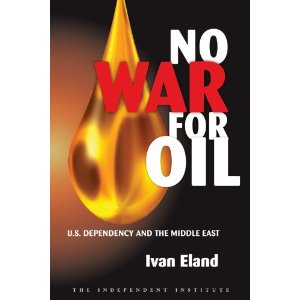
Shouldn’t the two parties pat themselves on the back? After all, under their stewardship, aren’t we reducing dependence on the terrorist nations and dictatorships of the Persian Gulf? Not really. Dependence on foreign oil is not the problem that conventional wisdom makes it out to be. As a corollary, all the wars we have fought over oil — for example, two with Iraq and the threat of such with Iran — have been largely unnecessary and immensely expensive.
Of the less than half of U.S. petroleum consumed that is imported, about half of that comes from the Western Hemisphere. Only about 18 percent of imports originate from the Persian Gulf. But it would not matter much if the United States produced 100 percent of what it consumed or whether it all came from the Persian Gulf, because the price at the pump is determined by the worldwide oil market. If more oil is put on market from anywhere around the globe, the price will go down; similarly, if oil production is cut anywhere in the world and not offset by increases elsewhere, the price will go up. Thus, this American mini-boom will not likely make much of a difference in what the U.S. consumer pays for gasoline, diesel fuel, or heating oil.
But at least we don’t have to buy as much oil or petroleum products from Persian Gulf autocracies or terrorist-sponsoring nations, right? Maybe so, but it doesn’t reduce our imports from those nations that much. Also, if the United States is now a net exporter of petroleum products, shouldn’t we stanch this flow and buy from the Persian Gulf even less? No.
Even if nations such as Iran and Saudi Arabia didn’t sell to the United States (come to think of it, the U.S. hasn’t bought oil from Iran in decades), they would simply sell to other, more than willing buyers. The rapidly growing countries in the developing world — such as China and India — care a lot less about the political nature of the countries supplying their oil than do the United States and Europe. So embargoes, boycotts, and efforts at becoming oil-independent have little effect. Supplies just reorder around obstacles in the world market.
But didn’t world oil production peak in 2006, as the International Energy Agency concluded probably occurred? Doesn’t this condemn the world to fighting more future wars over dwindling petroleum resources? No. First of all, “experts” have been repeatedly predicting the depletion of the world’s oil reserves since the late 1800s, but it never seems to happen. New technologies and periodic higher prices make previously uneconomic deposits viable — such as the tar sands and shale oil that have recently become economic — thus sustaining world production. Second, academic research has indicated that conflicts are much more likely over allocation of money received from abundant natural resources (for example, fighting in Nigeria over who gets proceeds from oil exports) than conflict over scarce resources that can be priced in a market. That is, it is cheaper to pay the market price than to go to war.
So if that is true — and it has been true since the classical economists discovered in the late 1700s that empire didn’t pay — then why has the U.S. military, over the years, essentially become an oil-protection force? Could it be that the U.S. is not aggressively employing military power to ensure that it has oil supplies — as the Imperial Japanese did before and during World War II — but is instead using the threat of armed force to keep a thumb on the oil lifelines of other nations (for example, China)?